
Notes from the foundry
If Then Dungeon: Rules Before Code
If Then Dungeon started by defining its logic-first dungeon rules, engine structure, visual language, and characters before committing to a playable implementation.
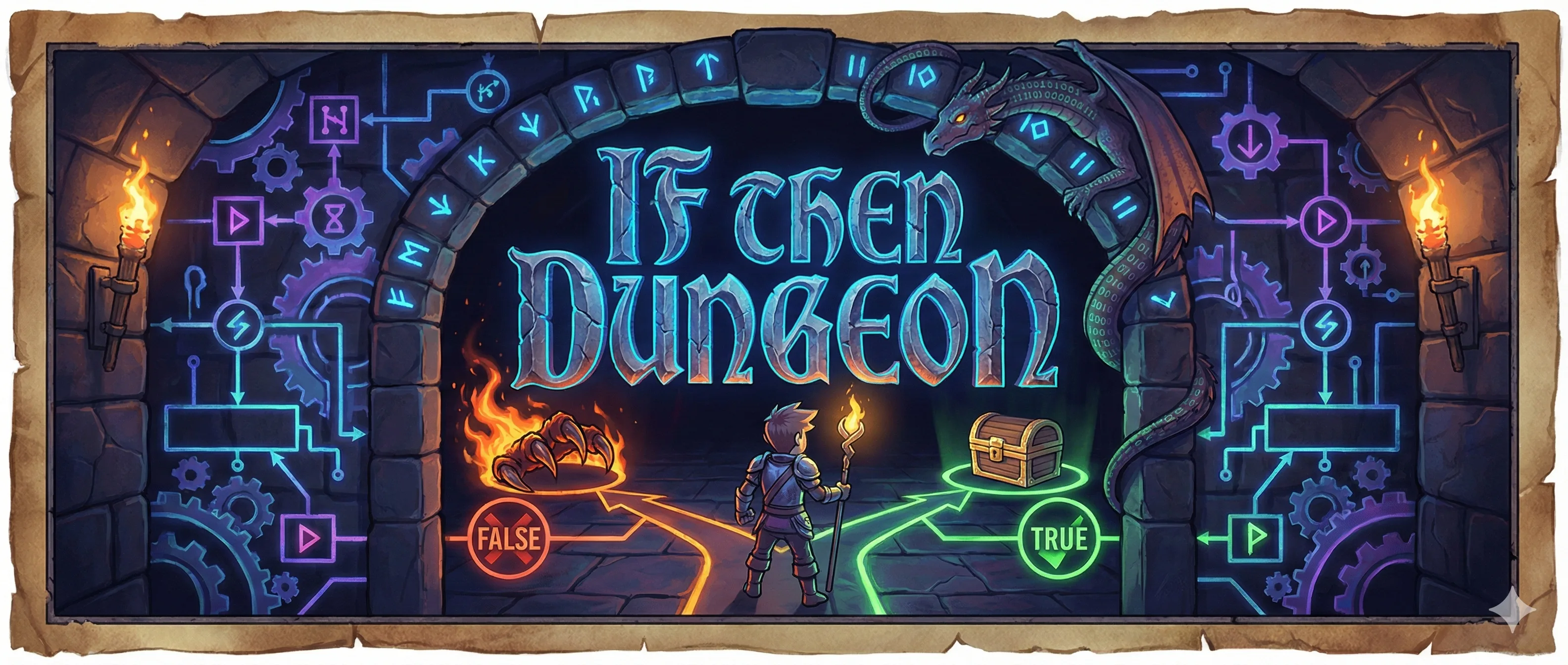
If Then Dungeon started as a design problem rather than a code problem.
The central idea is a grid-based dungeon where the player solves situations by assembling rules: sensors and conditions on one side, actions on the other, with ideas such as IF, THEN, ELSE, NOT, AND, and OR becoming game mechanics instead of syntax exercises.
The first repository work captured that brainstorming in structured data and then pushed it into engine specifications. That matters for this project because the interesting part is not merely teaching the vocabulary of conditionals. The dungeon has to behave consistently enough that a player can form a rule, predict what should happen, watch it fail at an edge case, and debug the logic.
The early design also established a dark-fantasy visual direction and began defining characters. Those pieces help keep the project game-first. The educational goal is there, but it should emerge from solving a dungeon rather than from disguising a worksheet.
At this stage If Then Dungeon remains a Workshop concept, not a playable release. The rules, engine ideas, visual language, and campaign direction are groundwork for the proof of concept that would eventually earn it a place on the Games side of Signal Foundry.