If Then Dungeon: Rules Before Code
If Then Dungeon started by defining its logic-first dungeon rules, engine structure, visual language, and characters before committing to a playable implementation.
concept / designRead entry
A planned dungeon adventure for exploring programming ideas with younger players. Still on the workbench; there is no playable demo.
No public build or external destination is available yet. Explore the project notes below.
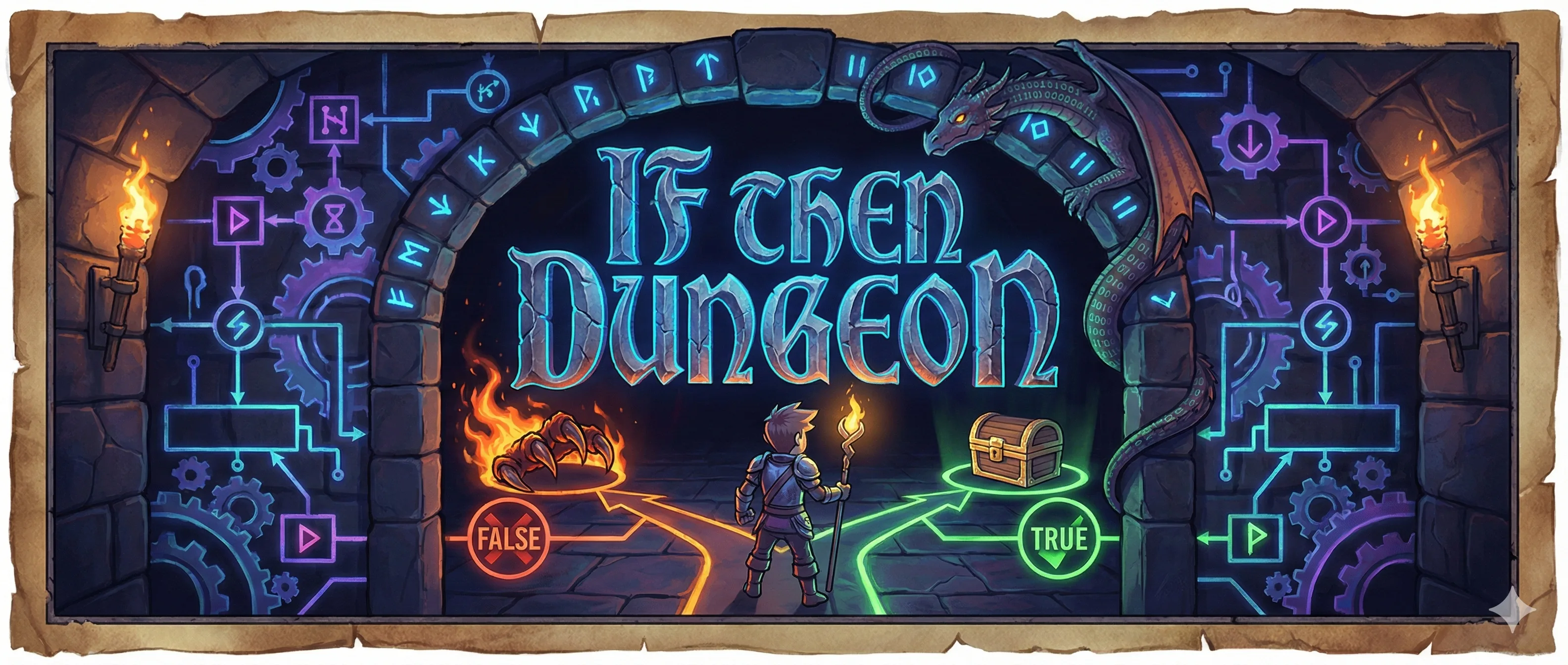
If Then Dungeon is a concept on the workshop bench: a logic-first, grid-based dungeon adventure that helps younger players explore programming ideas through play.
There is no playable demo. The features and experience described here are planned design, not an account of an existing game.
We are interested in games that make thinking part of the fun. This concept asks what a dungeon adventure might look like if programming ideas were part of the adventure itself.
The planned core is to program the hero with card-built rule rows. Sensors, Actions, and Operators would let players assemble IF/THEN/ELSE behavior without a heavy syntax burden. NOT, AND, OR, and operator precedence are intended to make Boolean logic something players can experiment with inside the dungeon.
Loops and ticks would provide the rhythm of the simulation. The design calls for deterministic enemy behavior with controlled randomness, so retries can support learning: inspect what happened, debug a rule, account for an edge case, and try again. Unused cards are intended to create Pressure, spawning enemies and making the choice of what to use part of the challenge.
Monsters, hazards, upgrades, and replayability are planned parts of the game—not decorations for classroom software. The intent is game-first: conditional reasoning, Boolean logic, debugging, and edge cases become tools for playing, rather than a separate lesson bolted onto the adventure.
The intended audience is roughly ages 10–15. That is an informal design target, not a formal age rating or a claim of classroom testing. A campaign and themes are intended, but specific campaign themes cannot currently be verified and are not named here.
Every mechanic above is planned design, not an implemented feature. There is no playable demo. The workshop is the right place for this idea while the design takes shape. If it becomes playable, this same project record can move to the games collection without losing its identity.
The illustration on this page is an original concept placeholder—not a screenshot or final game logo.
A closer look
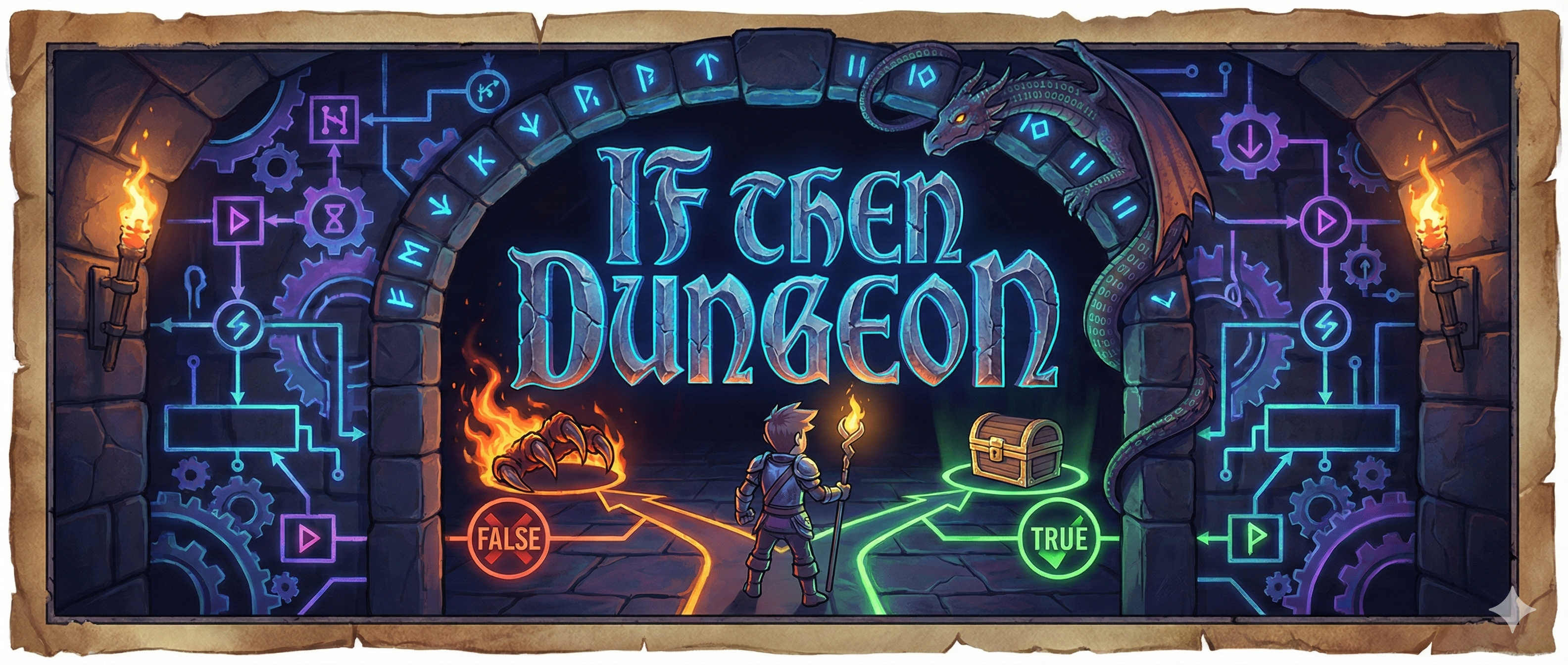
Early visual development for the If Then Dungeon concept.
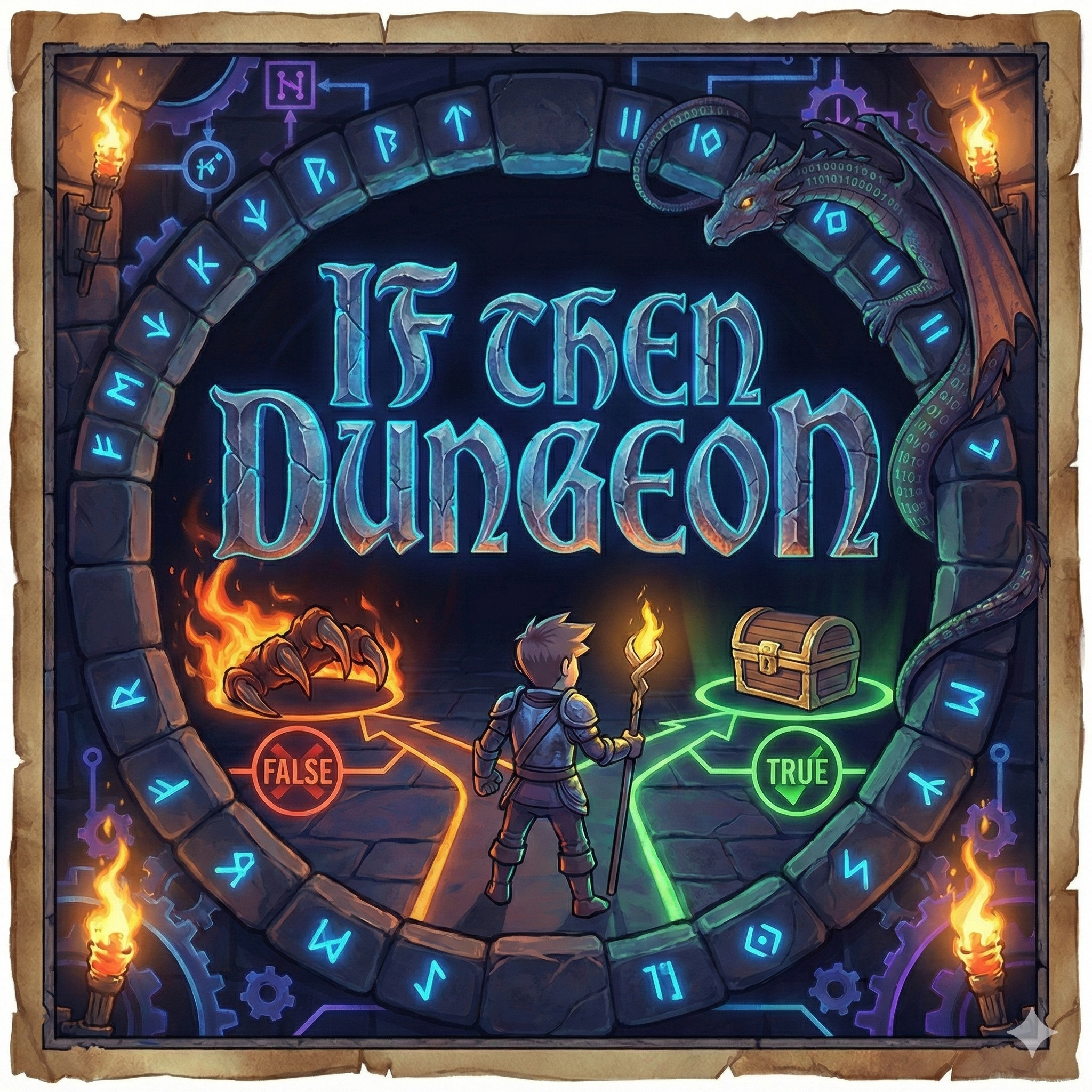
Additional visual exploration from the project's concept phase.
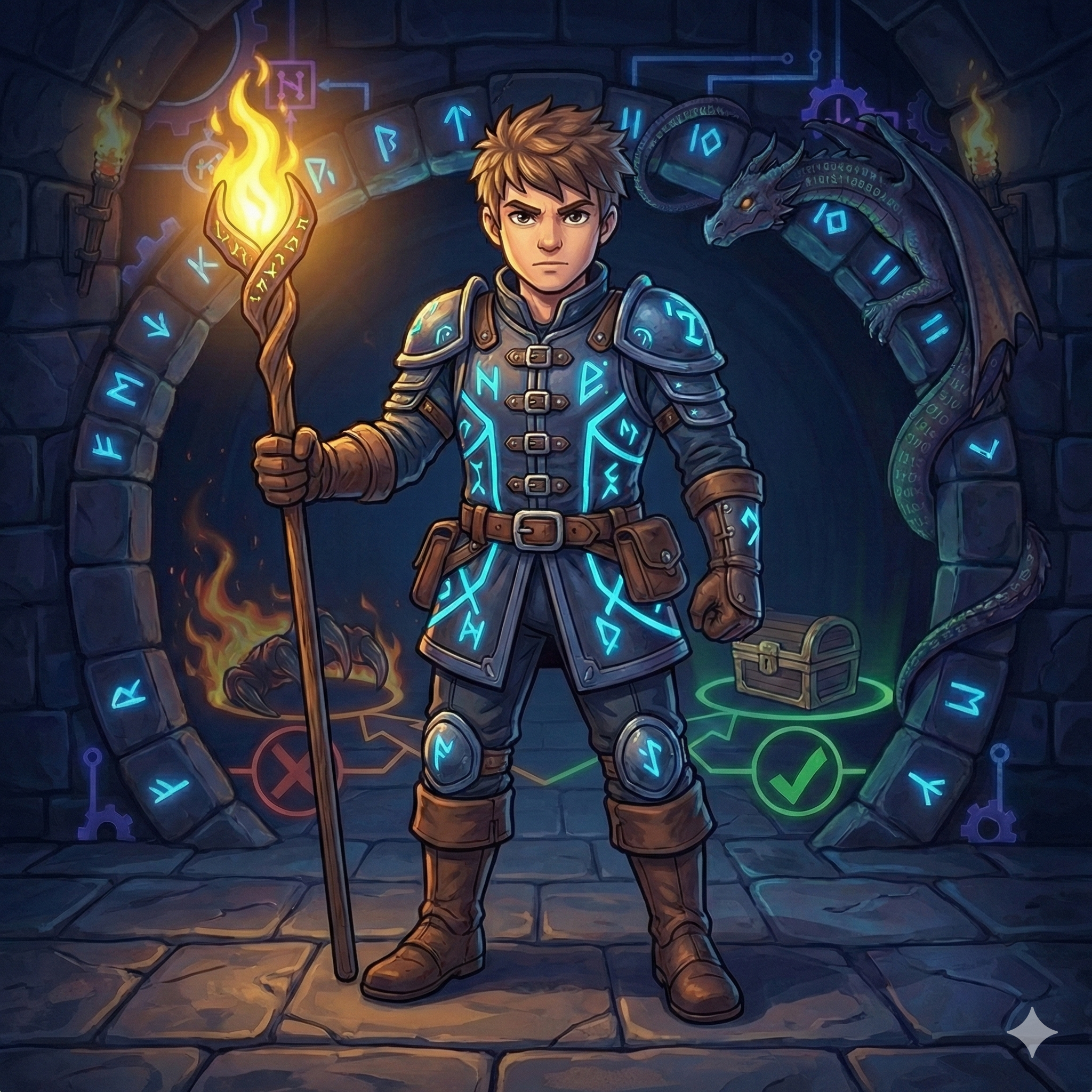
Additional visual exploration from the project's concept phase.
The build log
Current work and future direction are separate. Planned and exploratory ideas are not promises or playable features.
Program the hero using Sensors, Actions, and Operators, with IF/THEN/ELSE and Boolean logic. All mechanics are planned; no playable demo is available.
Explore loops, operator precedence, edge cases, and deterministic retries through monsters, hazards, and upgrades.
Unused cards are intended to create Pressure and spawn enemies; enemy behavior is intended to be deterministic with controlled randomness.
These are intended directions. Specific campaign themes are not available to verify and are not named here.
Keep the conversation going
Tell us what clicked, what didn’t, or what you’d like to explore.
From the build log
If Then Dungeon started by defining its logic-first dungeon rules, engine structure, visual language, and characters before committing to a playable implementation.
Follow the thread
A fully playable browser word game that began with a very practical goal—helping one of Ben's kids improve their English grades.
A playable demo of an emergency-dispatch simulation, with the rest of the game still in active development.